UX audit: a usability review that shows what to fix first
The short answer: a UX audit is a structured review of your website, web app or app in which we find where users get stuck and rank the fixes by impact. You get a report with concrete findings and proposed solutions, and the price is fixed in a written proposal within 24 hours.
- AA
- WCAG level in the accessibility check
- 24
- Hours to a fixed price in writing
- 2016
- Designing and building since
Many clients get in touch because something feels wrong without being able to name it: customers call instead of using the portal, the form gets abandoned halfway, or staff have built their own spreadsheets next to the system. A UX audit turns that feeling into a list of concrete problems, why they occur and what it takes to fix them. It is one of the most direct tools in our UX/UI design work, because it starts from what you already have.
What do we review in a UX audit?
- Heuristics: we assess the solution against established usability principles, such as visible status, recognition over recall and errors that are easy to recover from
- Core flows: we walk through the tasks that matter most to you, step by step, such as booking, sign-up, payment or search
- Accessibility: contrast, text sizes, keyboard navigation, screen readers and form errors, measured against WCAG level AA
- Conversion: where users drop off, what creates doubt, and whether the main call to action is obvious
- Content and language: headings, button labels and error messages that say what users expect
- Mobile: whether the solution actually works with one thumb on a small screen
Accessibility is no longer just good manners. Danish public bodies are covered by web accessibility legislation, and under the European Accessibility Act many private services, such as online shops and banking, now face requirements too. An audit shows where you stand before someone else points it out.
We also look at your analytics if you have them. Where do users drop off? Which pages are left fastest? What do people search for without finding it? The numbers show where the problem is, and the review shows why. Together they give you a ranking of fixes you can defend to management.
What do you get from a UX audit?
The deliverables. Everything is written so both management and developers can use it.
| Deliverable | What it contains | Who uses it |
|---|---|---|
| Prioritised findings | Every issue with a screenshot, severity and recommended fix | Product owner and developers |
| Flow maps | The key tasks mapped out with friction points marked | Management and design |
| Accessibility check | Concrete WCAG AA failures and how to fix them | Developers and compliance |
| Solution sketches | Wireframes of the most important fixes | Design and development |
| Walkthrough meeting | We present the findings and answer questions, in Copenhagen or online | The whole team |
How does a UX audit work, and how long does it take?
Day 1: Kick-off
We agree goals, audiences and the flows that matter most. You give access and any analytics.
Days 2–4: Review
Heuristic evaluation, flow walkthroughs, accessibility checks on mobile and desktop.
Days 5–6: Prioritising
Findings are collected, rated by severity and effort, and the top ones get solution sketches.
Day 7: Presentation
We walk you through the report and agree the next steps.
How much does a UX audit cost?
The price depends on how many flows and platforms need reviewing, and whether user tests are included. We write it as a fixed price in the proposal within 24 hours of your brief, so you know exactly what you get. As a reference, usability inspections and audits typically cost 24.000–40.000 kr at a fixed price in the Danish market. If the audit leads to a new build, the fixes can be delivered in our fixed packages, starting at EUR 2,500 plus EUR 85 a month. See them on pricing.
When should an audit be combined with user tests?
An audit alone is enough
- You need a quick, prioritised list
- The problems show in the data, such as drop-off in a form
- Accessibility has to be documented
Add user tests
- Users are specialists, such as nurses or technicians
- You disagree internally about what the problem is
- A big redesign decision is on the table
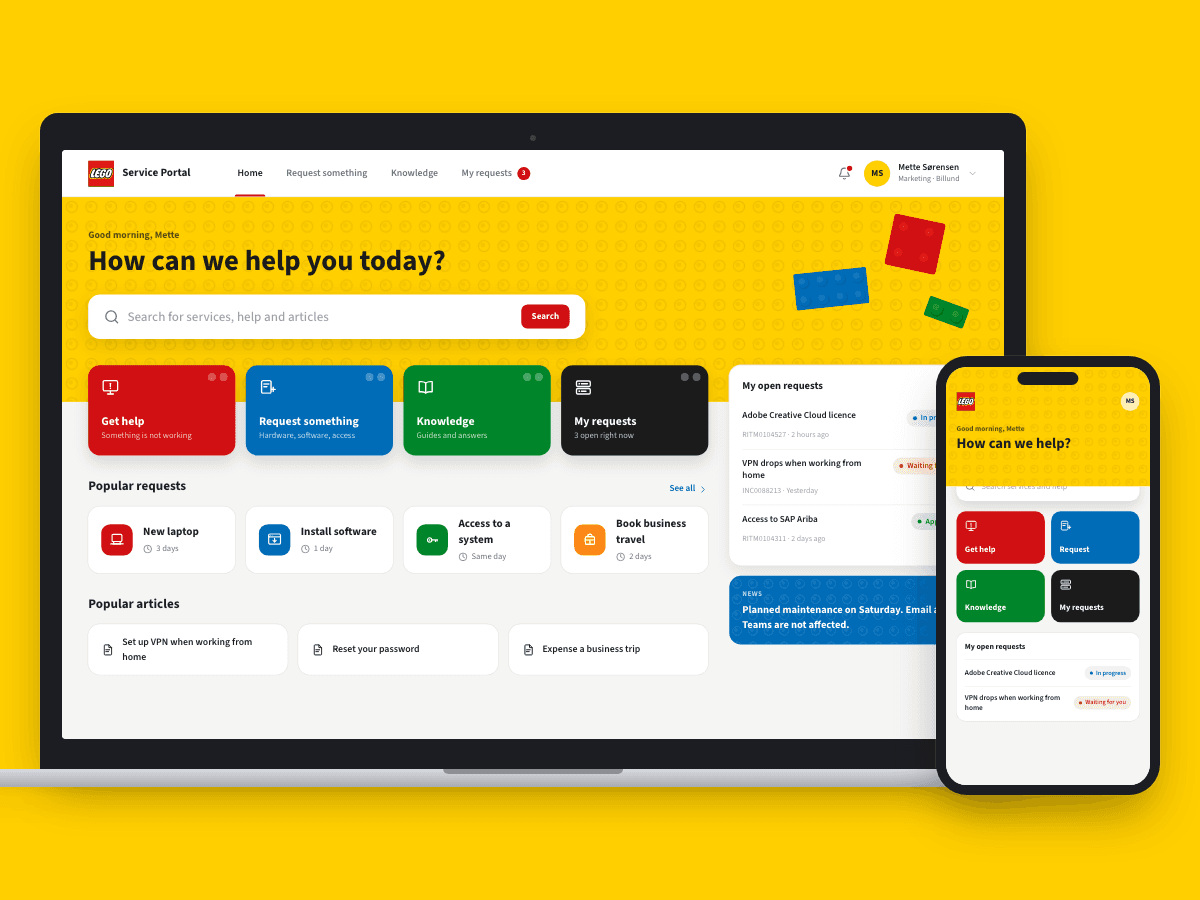
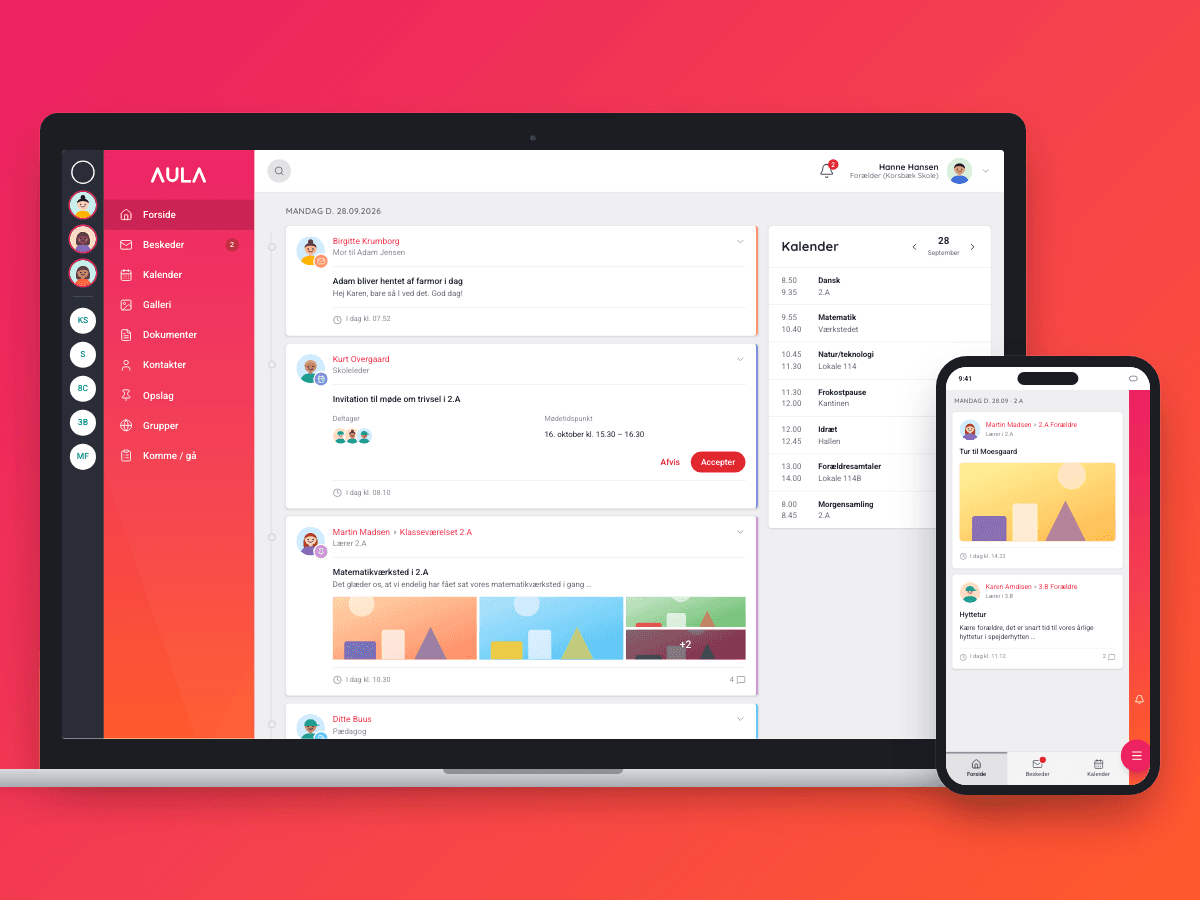
When users have expertise we do not, their behaviour settles the question. Then we add interviews and tests from our user research. At LEGO we built the Service Portal around the employee with usability tests, journey mapping and workshops. With Systematic we worked on UX/UI for AULA, the school platform used by half of Denmark, where parents, teachers and pupils have very different needs inside the same product.
Once the findings are in, the next step is often to test the fixes before any code is written. We do that with a clickable prototype. If the problems run deeper than individual screens, it may be time for a redesign.
Selected work
Built by us, in production today
What our clients say
We have worked with Ceptiv on several of our digital offerings, and they have become a natural part of the team. They move fast, turning ideas into new designs and clickable prototypes quickly, so we can test with customers early instead of debating on paper.
FAQ
FAQ: UX audits
What is the difference between a UX audit and a user test?
What does a UX audit cost with you?
Can you audit a product someone else built?
Do you check accessibility too?
How long does a UX audit take?
Can you also fix the problems afterwards?
Tell us what you need built
You get a written fixed-price proposal within 24 hours. No sales calls required.