Customer portal development that answers the phone for you
The short answer: a customer portal is a place behind a login where your customers find their own documents, orders and invoices instead of calling or emailing. We build it with MitID login and data straight from e-conomic, in fixed packages from DKK 18,000 plus DKK 600 a month.
- 40+
- Integrations, incl. e-conomic and MitID
- MitID
- A login Danish customers already know
- 24
- Hours to a written fixed-price proposal
The question behind every customer portal is: which enquiries can disappear? We can’t promise you a number, but we know where they usually come from. "Where is my invoice?" "When will the order arrive?" "Could you send the contract again?" A portal can answer every one of those without anyone on your side lifting a finger – and the customer gets the answer at ten in the evening, when it suits them.
What does a customer portal do?
A customer portal gives each customer their own space with the data that concerns them. It pulls information from the systems you already use, so you never maintain anything in two places. The table shows the features most portals are made of.
Typical customer portal features and the integrations behind them.
| Feature | What the customer can do | Typical integration |
|---|---|---|
| Login | Log in securely with MitID or email | MitID |
| Documents | Download contracts, reports and certificates | Microsoft 365 |
| Orders | Track status and see history | Your own system |
| Invoices | View, download and pay invoices | e-conomic, MobilePay |
| Signature | Sign agreements digitally | Penneo |
| Support | Find answers or open a ticket | HubSpot |
| Notifications | Get notified when something changes | Email or SMS |
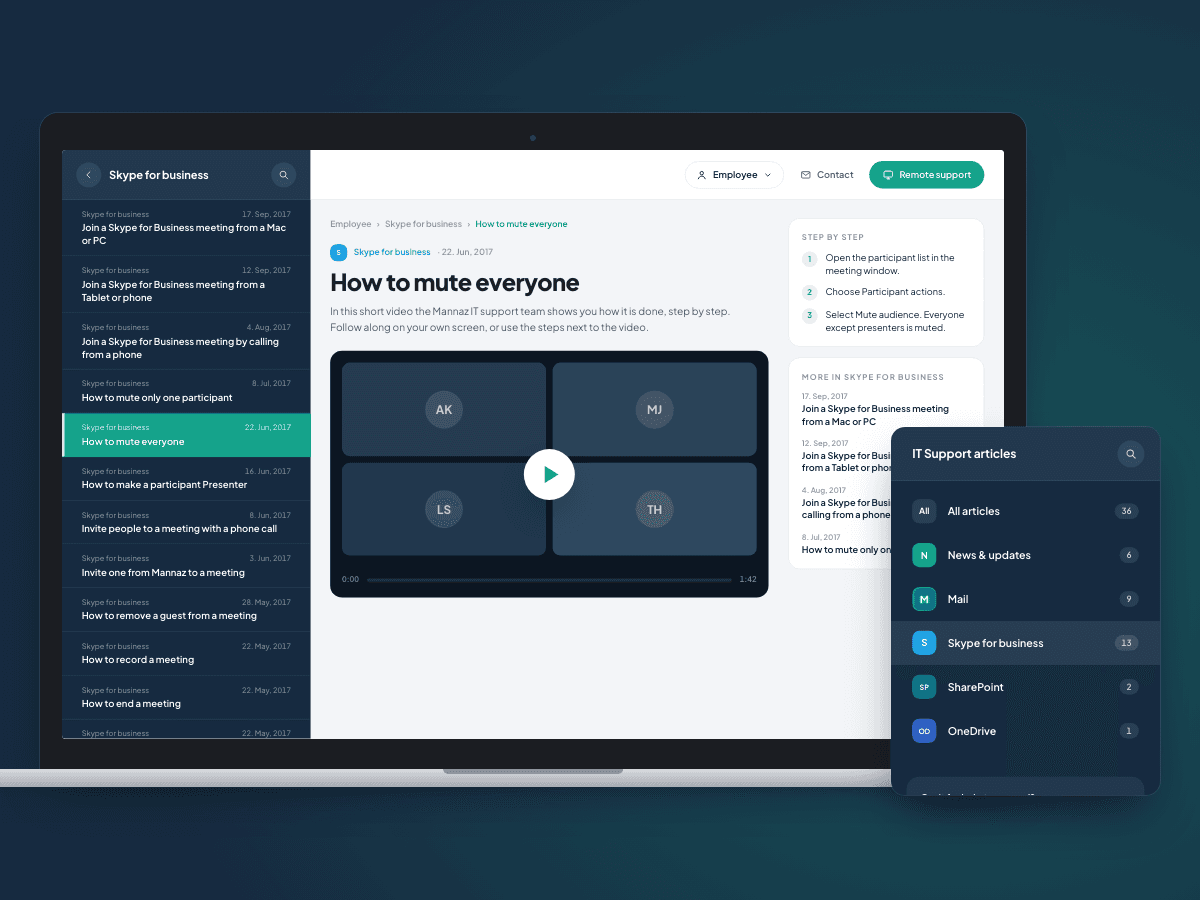
You don’t need all of it from day one. Most start with login, documents and invoices and add orders and signature later. For Mannaz we built an IT support portal where employees, participants and facilitators find answers themselves. It shows that self-service works just as well for users who are not customers in the classic sense. At heart, a portal is a web app with a login and integrations.
How do invoices from e-conomic get into the portal?
Through the e-conomic API the portal fetches invoices, credit notes and payment status for the customer who is logged in. Customers only see their own data, and your bookkeeper keeps working in e-conomic as before. If customers should be able to pay straight from the portal, we add MobilePay or card payments. Read more in the guide to e-conomic integration.
Why MitID login and digital signature?
MitID gives you certainty about who is logging in, and it is a login Danish customers already know. No forgotten passwords, no reset emails. If agreements need signing too, the portal can send documents for signature and file the signed version with the customer automatically. See how we work with digital signature and MitID.
What about security and GDPR in a customer portal?
- Permissions per customer and per user, so nobody sees anyone else’s data
- A log of who viewed and changed what
- Encrypted connections (SSL) and ongoing security updates in the monthly plan
- Backups as a standard part of the monthly plan
- A data processing agreement describing which data is processed and where
- Deletion of data when the customer relationship ends
GDPR is at least as much about which data you choose to show as about the technology behind it. We scope that with you during design, so the portal only shows what the customer actually needs. Less personal data also means less to protect and less to delete when the relationship ends.
Without a portal
- Customers call for invoice copies
- Contracts bounce around by email
- Order status takes a phone call
- Data sits in several inboxes
With a portal
- Customers download the invoice themselves
- Contracts are signed and filed in the portal
- Status updates automatically
- One place with controlled access
How much does customer portal development cost?
A portal fits our web app packages. With one integration, such as e-conomic, it is Small: DKK 18,000 plus DKK 600 a month and 12 features. With MitID and e-conomic it is Medium: DKK 36,000 plus DKK 900 a month and 24 features. Add digital signature and it is Large: DKK 54,000 plus DKK 1,200 a month and three integrations. Every detail is on pricing.
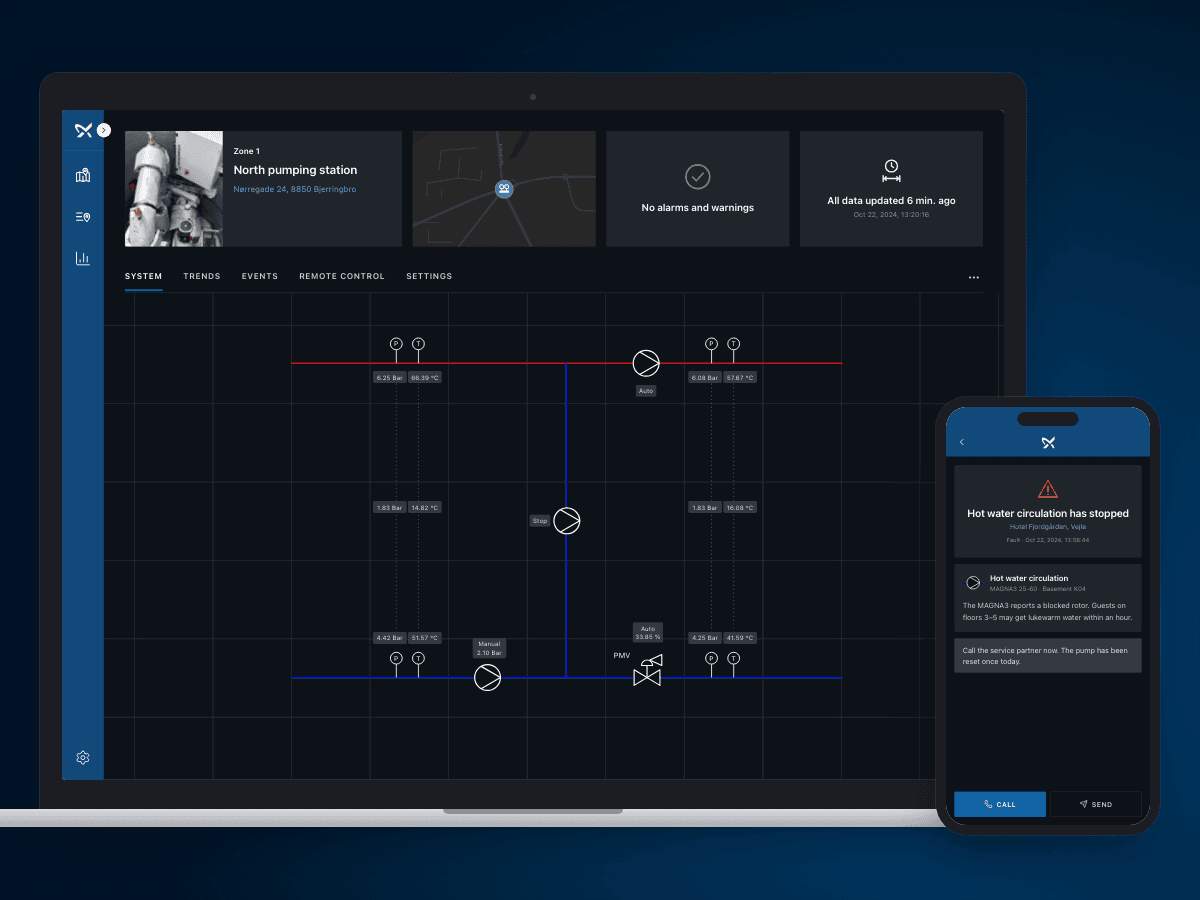
For Grundfos we worked on customer portals for iGRID, from field research with users to UI and clickable prototypes. See the Grundfos case. If the portal is a step away from spreadsheets and email, also read replacing Excel with a custom system.
How do you get started with a customer portal?
- Count enquiries for a week or two: what do customers ask about, and how often?
- Pick the three questions that take up the most time and make them the portal’s first features
- Find out where the data lives today – e-conomic, your own system or a shared folder
- Decide how customers will log in, and who at each customer should have access
- Send us a short brief, and you get a fixed written proposal within 24 hours
The exercise rarely takes more than a couple of hours, and it makes the portal far better. A portal built around the questions customers actually ask gets used. A portal built around an idea of what they might want rarely does. Start here.
Selected work
Built by us, in production today
What our clients say
We have worked with Ceptiv on several of our digital offerings, and they have become a natural part of the team. They move fast, turning ideas into new designs and clickable prototypes quickly, so we can test with customers early instead of debating on paper.
FAQ
Questions about customer portals
How much does a customer portal cost?
Can customers log in with MitID?
Can the portal show invoices from e-conomic?
How does a customer portal stay GDPR compliant?
Can customers sign agreements in the portal?
Do we have to build the whole portal at once?
Tell us what you need built
You get a written fixed-price proposal within 24 hours. No sales calls required.