A development subscription with fixed prices
The short answer: you pay a one-time price to have the system built, then a fixed monthly plan from EUR 85/month covering hosting, maintenance, updates, support, security and backups. New features after launch come at a fixed price per extra feature, and you can cancel with 30 days’ notice.
- 24 t
- Written fixed-price proposal
- 40+
- Pre-built integrations
- 30
- Days’ notice to cancel
Plenty of business owners want "a developer of our own" without hiring one. They want to know the monthly cost, and they do not want an hourly bank that runs dry in March. That is why our model is built as a subscription in two parts: a one-time price for the solution itself and a monthly plan to keep it running. On top of that you order new features, each with its own fixed price, when you actually need them.
12–36
Features per package
1–3
Integrations per package
30
Days’ notice to cancel
What does the monthly plan include?
The monthly plan is not an hourly bank. It covers everything needed to keep the solution working, secure and up to date. That is the work that otherwise turns into surprise invoices because a certificate expires, a dependency needs upgrading or the server runs out of space.
- Hosting of the solution
- Maintenance and ongoing updates of code and dependencies
- Support when something does not work as it should
- Security and SSL certificate
- Backups of your data
How much does a development subscription cost?
Websites and web apps. Mobile apps have their own packages from EUR 4,000 + EUR 165/month.
| Package | One-time | Per month | Includes |
|---|---|---|---|
| Small | EUR 2,500 | EUR 85 | 12 features, 1 integration |
| Medium | EUR 5,000 | EUR 125 | 24 features, 2 integrations |
| Large | EUR 7,500 | EUR 165 | 36 features, 3 integrations |
See the details for each package on pricing. To compare with what maintenance costs elsewhere, we have a separate guide to website maintenance cost.
Extra features at a fixed price
This is where a subscription differs most from an hourly bank. When you need something new after launch, such as an extra report, a new field in the booking flow or an export for the bookkeeper, each extra feature has a fixed price. You know the price before we start, and you only pay when you actually order something. Larger requests, such as a new integration, get a written proposal.
Subscription, in-house hire or hourly retainer?
In-house hire or hourly retainer
- Hiring: salary, pension and recruitment, and typically 2–3 months before the person starts
- One person rarely covers design, frontend, backend and operations
- Hourly retainer: senior time is often billed at 750–1,500 DKK an hour at Copenhagen consultancies
- Hours are spent whether or not the task grew beyond the estimate
Subscription with us
- Fixed monthly price for operations, fixed price per new feature
- Design, development and integrations from one senior team
- No recruitment, no gaps for holiday or sick leave
- Written fixed-price proposal within 24 hours
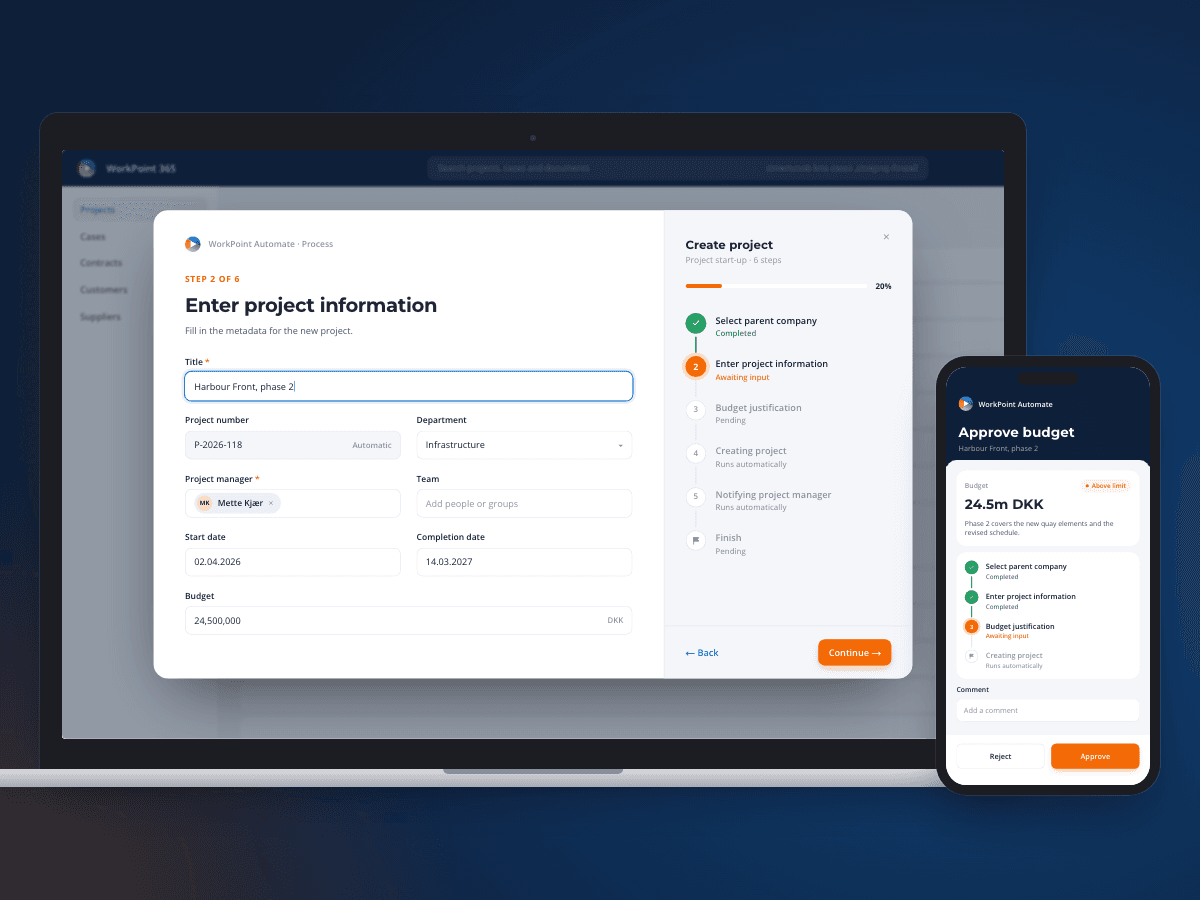
If you have enough development work for a full-time role all year, a hire can make sense. We go through the maths in hire a developer vs an agency. A close collaboration does not have to mean a hire either: at WorkPoint one of our designers was embedded in the product teams through a two-year collaboration.
When does a development subscription fit, and when does it not?
The model is built for businesses with a system, portal or website that must run reliably every day and evolve in small steps. It fits less well if you need a large team for a short burst, or if you already have in-house developers and only need extra hands for a particular sprint.
- Good fit: you want to know the monthly cost upfront and avoid invoices for hours you did not see coming
- Good fit: requests arrive over time, such as a new report one month and an integration six months later
- Good fit: you have no in-house developer and do not want to depend on a single freelancer
- Weaker fit: you need five developers for three months and then none
- Weaker fit: you want to run hosting and operations on your own servers
What a typical month looks like
In most months you barely notice the subscription, and that is the point. The solution runs, updates are applied, backups are taken and certificates are renewed. If a bug appears, you write to us and we fix it as part of support. When you have a new idea, you describe it briefly and we come back with whether it is a single feature at a fixed price or needs a separate proposal. You approve before anything is built, so the budget never gets away from you.
Cancellation terms
You can cancel with 30 days’ notice, and you own the code and data. If you cancel within the first 15 months, there is a one-time fee that depends on the package (Small, Medium or Large). After 15 months, only the 30 days’ notice applies. It is stated in the proposal from the start, so there are no surprises if your needs change.
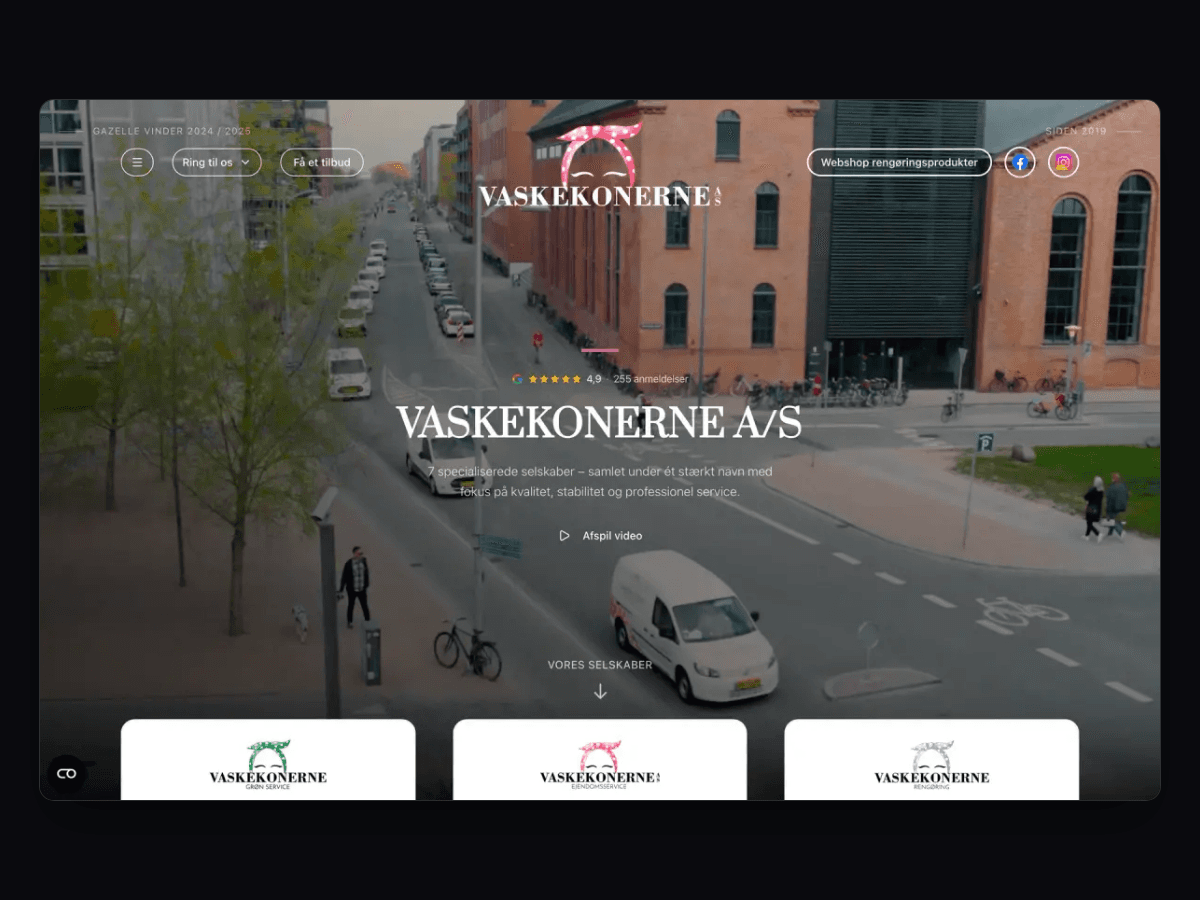
An example of how it grows over time: at Vaskekonerne eight solutions work together in one circuit, from website and booking to operations.
What our clients say
We have worked with Ceptiv on several of our digital offerings, and they have become a natural part of the team. They move fast, turning ideas into new designs and clickable prototypes quickly, so we can test with customers early instead of debating on paper.
FAQ
FAQ: development subscriptions
Is a development subscription the same as an hourly retainer?
Are new features included in the monthly plan?
Can we cancel the subscription?
What if we need a larger extension?
Is it cheaper than hiring a developer?
What kind of solutions can we get on a subscription?
Tell us what you need built
You get a written fixed-price proposal within 24 hours. No sales calls required.