App development in Copenhagen, from idea to App Store
The short answer: we are an app agency in Copenhagen that builds iOS and Android apps in React Native, so you get one codebase instead of two. Our mobile packages start at EUR 4,000 + EUR 165/month, and we handle publishing on the App Store and Google Play.
- 1
- Codebase for iOS and Android
- 24 t
- Written fixed-price proposal
- 12–36
- Features per mobile package
An app is not a website made smaller. It has to live in two stores with their own rules, work without a stable connection, send notifications and survive Apple and Google updating their operating systems every year. We design and build apps from our office in Copenhagen (København Ø), and we meet you here or online. Below are the prices, the technology and the route from first sketch to an app people can download.
How much does it cost to build an app?
Market ranges are typical in Denmark. Our packages include 12, 24 or 36 features and 1, 2 or 3 integrations.
| Complexity | Typical market range | Our mobile package |
|---|---|---|
| Simple app | DKK 50,000–150,000 | Small: EUR 4,000 + EUR 165/month |
| Medium app | DKK 150,000–500,000 | Medium: EUR 6,500 + EUR 250/month |
| Complex app | DKK 500,000 to 1m+ | Large: EUR 10,000 + EUR 325/month, or a written proposal |
Remember the running costs. The market typically budgets 15–20 % of the build cost per year for maintenance. With us that sits in the monthly plan together with hosting, support and backups. Apple charges 99 USD a year for a developer account and Google 25 USD once. The full breakdown is in how much does an app cost.
What drives the price of an app?
Two apps with the same number of screens can cost very different amounts. It is rarely the screens themselves that make an app expensive. It is what happens behind them, and how many kinds of user the app has to serve.
- Number of features, such as login, profile, payments, chat, maps or calendar
- Integrations with your other systems, such as booking, CRM, accounting or MitID
- Roles: an app for customers and a panel for staff are two products
- Offline use, where data is stored on the phone and synced later
- Push notifications, camera, GPS or Bluetooth
- Design level: standard components or a fully crafted look of your own
That is why our packages count features and integrations rather than hours. You can see exactly what is included and choose what goes into the first version and what can follow later as extra features at a fixed price.
Why do we build in React Native?
Two native apps
- One codebase in Swift for iOS and one in Kotlin for Android
- Every feature is built and tested twice
- Often needs two specialists
- Makes sense for heavy graphics or very hardware-bound code
React Native
- One TypeScript codebase for both iOS and Android
- Real native components, not a website in a frame
- Same language as your web app, so logic can be shared
- Access to camera, GPS, notifications and Face ID
Read more about the technology on our page about React Native app development.
From idea to the App Store and Google Play
Scoping
Who uses the app, what must they do, and which systems must it talk to?
Design and prototype
Screens are designed for thumbs and tested on a real phone.
Development
You get test builds on your own phones along the way.
Publishing
We prepare texts, screenshots and privacy details and submit the app for review by Apple and Google.
Operations
The app is kept up to date as new iOS and Android versions arrive.
Publishing is the step many underestimate. Apple rejects apps with missing privacy details, a login without a test user or features that look like a website. We have done it before and know what reviewers look for. The app is published under your own developer account, so it is yours.
MitID in an app
Many Danish apps need to know exactly who the user is, for example for memberships, health, finance or agreements. MitID in an app requires an approved broker and a flow that switches to the MitID app and back without losing the user. MitID is among our pre-built integrations. Read more about MitID in your own app.
Does it even need to be an app?
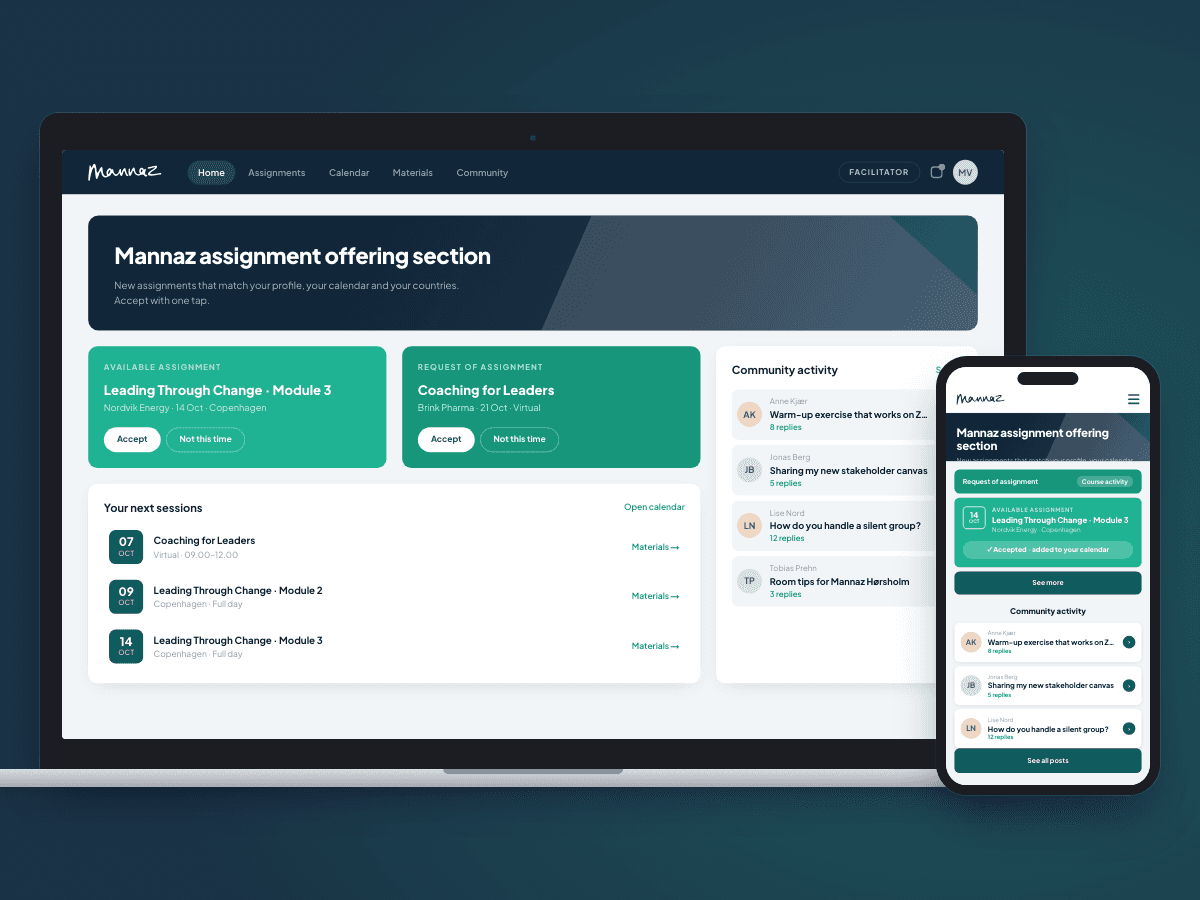
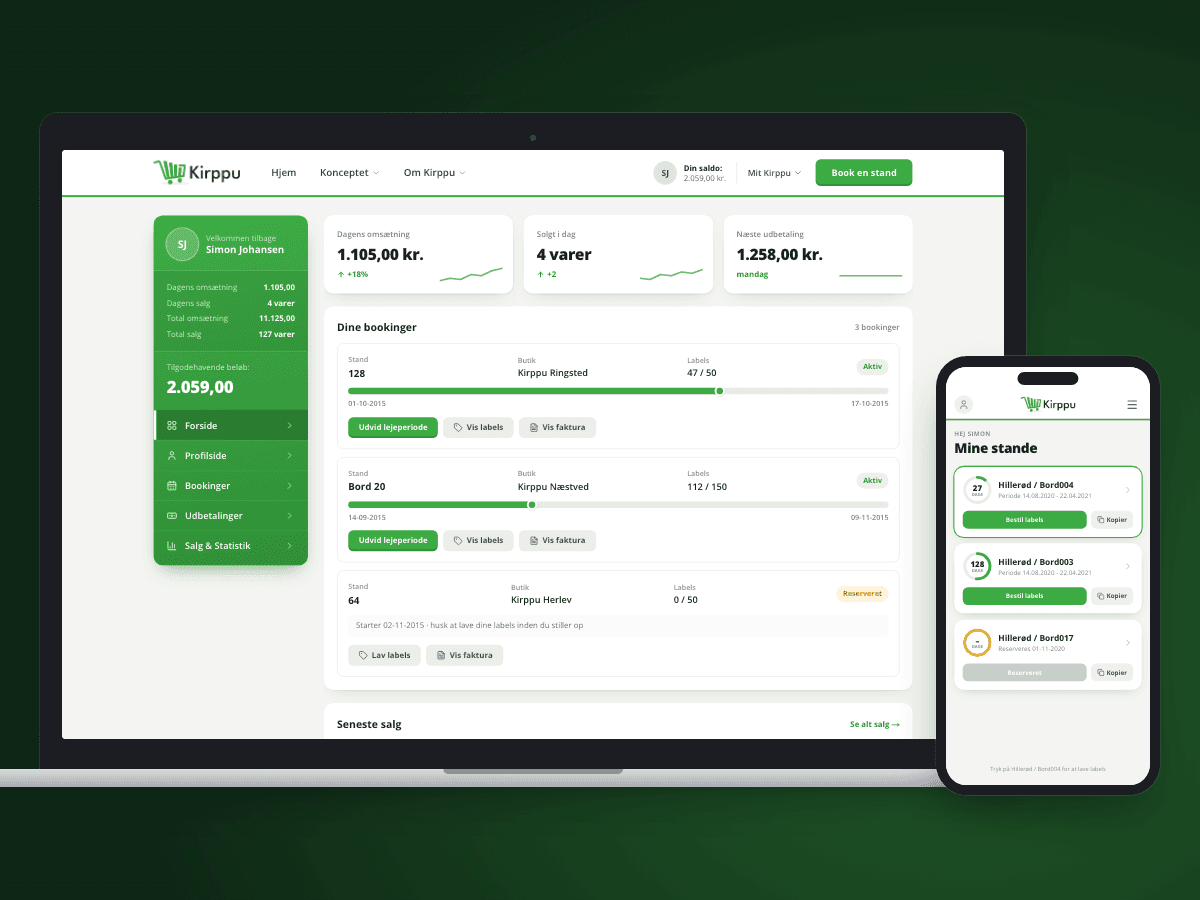
Not always. If users need notifications, the camera, offline access or an icon on the home screen, an app is right. If the solution is mostly used at a desk, a web app is often cheaper and faster. For Kirppu we built a mobile label app as part of the booking system. For MyMannaz one web app for coordinators, facilitators and participants was the right choice. We go through the difference in web app vs native app.
Ready to move on? Describe your app and you will get a written fixed-price proposal within 24 hours.
What our clients say
We have worked with Ceptiv on several of our digital offerings, and they have become a natural part of the team. They move fast, turning ideas into new designs and clickable prototypes quickly, so we can test with customers early instead of debating on paper.
FAQ
FAQ: app development in Copenhagen
How much does an app cost in Copenhagen?
Do you build for both iOS and Android?
Do you help get the app into the App Store?
Can the app use MitID?
What does the monthly plan for an app cover?
Do we need to meet in person in Copenhagen?
Tell us what you need built
You get a written fixed-price proposal within 24 hours. No sales calls required.